Showing posts with label Poetry. Show all posts

Friday, 6 September 2013

Poetry Master Class with War Poet Brian Turner

Words by Kevin Danson


In a room with a cosy number of people, Brian Turner took the stage (or, rather, perched on the edge of a desk) with a welcoming natural ease. I have no idea why I ended up plonking myself on the otherwise deserted front row, making myself an easy target for this trained face-to-face combat officer, but there I sat. Having previously addressed impressive numbers of people (1600 soldiers, for instance!), this small gathering would be like recalibrating an AK47 (is that even a gun?) with his eyes closed.


Brian immediately launched into his signature poem, Here, Bullet, also title of his first book . I just handed in my second poetry assignment on this poem, so to hear some backstory was a treat. One of the bonuses of poetry is that it is an easily transportable art. He tells us that he had only one poem, by the American Laureate, Philip Levine, called They Feed They Lion, which had embedded itself in him. When the first lines of Here, Bullet came about, the rhythm of that single poem came through in the beat of his. Finishing this poem (with a powerful voice much different to his talking one), he admitted the meaning remains strange. I know every time I have read it a new image comes to mind - or a new thread of thought. I fail to see how he can consider himself a rookie with the ability to cause such abstract interpretation from his words.

Between the end of some of the behind-the-scenes elements to Here, Bullet and some 'release' sound effects (not that sound… an unscrewing of a coke bottle) being provided by a member of the audience, Brian reads a stunning poem - Thalia Fields. For me, this poem is all about the line, ‘The plane, like a shadow, guiding the rain, here…’. It’s an impressive way to see the mind of this poet/soldier through his memories and feelings. These are just tasters remember, for more you need to get your hands on his books!

I have to admit that there were many comments made on the subject of war, of course, but unfortunately I have no views politically, patriotically or morally when it comes to such matters. One fact mentioned, however, which caused me to raise my eyebrows in surprise, was that on average, from the Iraq war alone, a number of 18 soldiers commit suicide per day. That’s all of his platoon (48) gone in a matter of days. Chilling.


The Hurt Locker, a powerful poem with a pensive ending line, "how rough men come hunting for souls", allowed Brian to provide us with another backstory to the origin of this now famous term. Although his poem came out several years prior to the award winning film, he remembers hearing it from his squad leader. When he asked this leader whether he had said it or not, the reply was a down-to-earth, "Yeah, shit just comes out of my mouth". After further research, the term was found to have originated in a small Texas newspaper talking about a local football (that’s American football) game during the war in Vietnam. I mean, how else?

His poetry, usually found under the war genre is, for me, entirely different to how I perceived this genre to be. The words bring satisfying, albeit horrible in experience, images to the mind, many of which are formed in free verse. I never got the opportunity to ask whether this style of writing came from his (sub)conscious gratification of freedom from the army and from war…

Many of us wanted to know what made him enter the army after having received his Masters in Poetry. Giving only a bit away, he shares that his family had a heavy military influence and despite not being forced over the threshold, it was the expected norm. Not giving much away though, Brian ‘lets slip’ that his book, My Life as a Foreign Country, will be coming out early 2014 as the deal is being linked with an undisclosed British publisher as I type.

Always concerned with our well being, Brian was worried whether he had been reading too much or talking too much. I would have preferred he did both to the extreme, as he seemed to have a lot of stories and anecdotes to tell, as well as recommendations and inspirations of other poets. He mentioned Carolyn Forché with admirable gusto, telling us how he has a signed copy of her poem - The Colonel, on his wall to which he looks at for inspiration, picturing the destination of where he wants to end up: ‘I’m at the foothills that lead to the mountains’. Another poet he mentions with personal fondness is Yehuda Amichai and gives us a reading of another thought-provoking poem, The Diameter of The Bomb.


With time to shoot questions at Brian, he is asked what kind of writer he is; everyday, sporadic, organised? Since writing from a young age, he tells us, it is easy for him to go with a poem when it comes to him instead of needing that discipline of daily scribblings. One day, when out looking for nails to complete some overdue odd jobs around the house, he found himself picking up a nail which resembled a bullet out of one of the weapons he used while in Iraq. Before he knew it, his notepad was in his palm and he was walking around the store retrieving images only a poet can. He recognised the rotating fan on the ceiling as the blades from a helicopter. I would have recognised them as blades on a fan. His experience and education have allowed his mind to look at things in ways my mind never would. Maybe from now on it could.


I didn’t know what to make of Brian when I first watched him reading his poems on a Youtube video. All I knew was that he was a soldier and went to war. Having now been within spitting distance of him, seeing and listening to how he talks about serious and trivial issues in a soft-spoken voice, I’d say he’d be the top of my list if I was to go camping, not just for his army experience (major plus), but also for the stories I could listen to by the fire with either bubbling marshmallows or a blanket covering my eyes in terror. If you’re up for it Brian, this summer, Edale.
Kevin Danson is an English Literature student at MMU who likes to share his ramblings. Read his blog Pebbleddash and follow him on Twitter @pebbleddash


Wednesday, 3 July 2013

COMMUNITY DAY AT BURNAGE MEDIA ARTS COLLEGE!

Words by Amillah Javed, photographs by Waleed Alrumaih


Burnage Media Arts College successfully hosted another Community Day on Friday, 28th June. Stalls were provided by Manchester Markets and Burnage Media Arts College staff, alongside stall holders from the local area who were present to sell a variety of products, including food, drinks, plants, crafts and games.

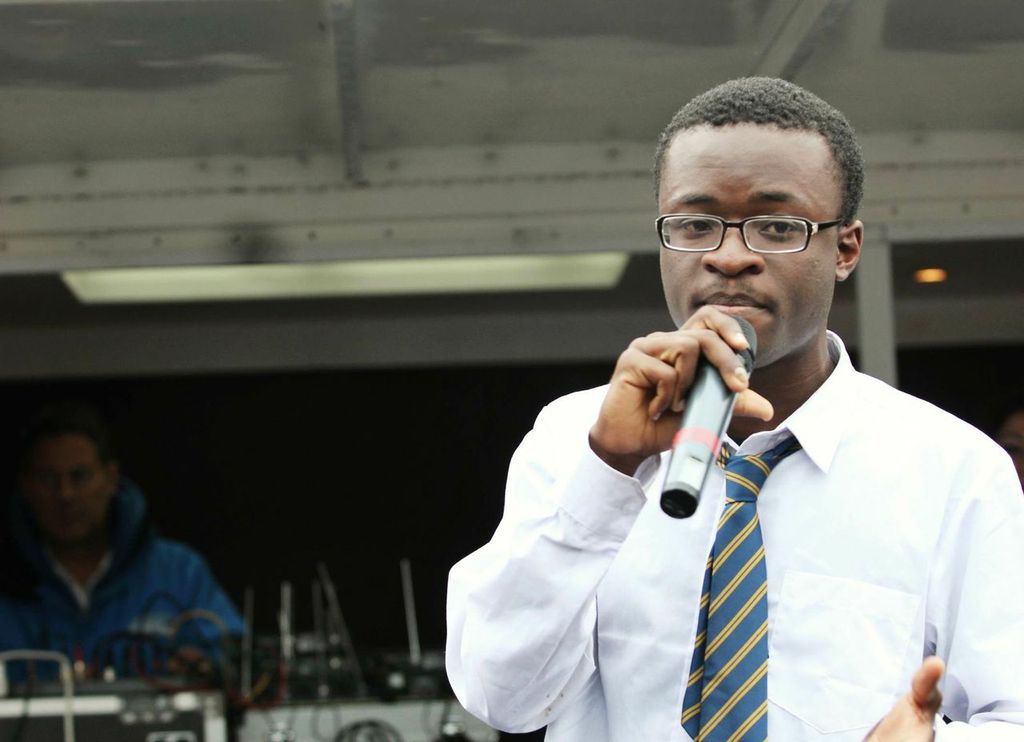
Nine brilliant Burnage boys from The Burnage Poets Society took part in MMU’s Mother Tongue Other Tongue Competition and took to the stage on the big day to perform their mother tongue/other tongue poems. Not only were these poems read out, they were rapped and sang to fellow class mates and other students who eagerly cheered them on.

Angela Pane has been teaching French at Burnage and Italian as enrichment, as well as helping the English as an Additional Language Department (EAL) in order to get the boys engaged with this poetry competition. She told me, “Some of the boys are embarrassed about speaking in their first language and they don’t really use it in school, even though this school is a multicultural school where 29 languages are spoken. I decided to work mainly with Bengali, Italian, Farsi, Czech and Portuguese native speakers.” Another reason why Angela decided to take part and help the boys in The Burnage Poets Society is because she loves poetry and has been writing poetry since childhood.

Most of the poems were love poems, so the students definitely managed to reveal their emotional side. Khaiber Sarwari, a talented year 11 student at BMAC, played the piano throughout the whole show and also performed a poem in Farsi towards the end. He said, “I am looking forward to our performances today because we have been working hard for this. This competition shows that we are still proud of our mother tongue and it gives us a great opportunity for it to be recognised and to speak in our first language, apart from English.” I was astonished to find out from him that he speaks six languages: English, Farsi, Pashto, Urdu, Turkish, Dari, and is currently learning French.  

EAL Teacher, Ms Temina Khan, assisted Angela and told me that BMAC is one of the first schools to introduce the International New Arrivals project (INA). This offers help and support to those who are learning English as a second language. New INA students, Miskat Rahman and Emmanuel Oyelami, worked together in order to perform their poem in Italian and English. Emmanuel said, “Our poem is a love poem where two people have departed and are trying to get back together again. I’m very nervous because this is my first time to perform on stage like this.”

Another impressive duo, Peter Gina and Martin Novak, worked together with one beatboxing while the other rapped in Czech. Martin sums up how he felt, “I feel sick, nervous and excited.”

Year 9 student, Mahbub Chowdhury, confidently performed a poem in Bengali in a triple act with Zeeshan Muddasar and Shuad Al Yunus, who translated the poem into English. Mahbub said, “This poem is about love and desire, where a pair of lovers struggle to come together because of certain forces stopping them to get together. The award winning film Titanic inspired millions and millions of people and we were amongst those people to get inspired. Therefore, we wrote this poem together based on the movie.” He further added, “I would like to thank my teacher because she has devoted her time and has helped us out greatly.”

Bernard Asuako, another student whose first language is Twi, told me, “I’m performing in English today; my poem is called Remember me and is about friendship and what you feel like after you leave your country. I was inspired to write this poem after thinking about the time when I left my country and the ones I love.”


Angela Pane summed up the day telling me: “I’m extremely happy with the boys today and the performances were the best part. They have put a lot of work into their performances and although this has been very difficult for them to dramatise their poetry and rap it out, overall they did a fantastic job. The boys have been great and have worked so hard with me. I know they have enjoyed using their first languages and this has been an amazing experience for them. I hope MMU continue to do competitions like this in the future and I would love to be part of them!”


Amillah Javed is currently studying English and Film at Manchester Metropolitan University. She is passionate about journalism and teaching and hopes to pursue a career in one of these fields. Amillah also has an interest in writing creatively and having work published. Follow her on Twitter @a_amillah 

Tuesday, 11 June 2013

Abraham Moss High School – Mother Tongue Other Tongue Event

Shamshad Khan, an established poet who has also had her work featured in several anthologies, came to Abraham Moss High School to deliver a Mother Tongue Other Tongue creative writing workshop.

Words and photographs by Amillah Javed


ON the afternoon of Friday 7th June, I was introduced to a group of nine lovely multilingual girls of Abraham Moss High School. As well as the students, I was also given the opportunity to be part of this session where each pupil read out their poem either in their mother tongue or other tongue. The languages these poems were performed in were Urdu, English, Arabic, Chinese, Pashto and Italian.

Pupils and staff attending the workshop were told to come prepared with a poem, song or lullaby, either in their mother tongue or other tongue. They were encouraged to speak to their parents, grandparents, neighbours or any grown up at home, to help them share their culture.

MTOT is a poetry competition led by Poet Laureate, Carol Ann Duffy, who is also the Creative Director of the Manchester Writing School at MMU. This competition is set out to encourage school children to write poetry in their native language as well as their other language.

Poet, performer and facilitator, Shamshad Khan said, “Abraham Moss has a lovely atmosphere and I think that the pupils really showed that and brought it into the session today.” Thus, the MTOT competition allows students to explore their mother tongue, and though everyone didn’t understand all the languages spoken today, connections  were still made through emotions which everyone managed to reveal whilst reading.

Shamshad started the session by going around the group telling the students and the assisting teachers to share any word they like the sound of. Some of the words shared were: ‘Polka dot’, ‘Ni Hao’, ‘Tamasha’, ‘Khatta’ and ‘Meetha’.

The students were then given the opportunity to share their mother tongue poem, lullaby, or song by reading aloud to the rest of the group. I also took part and attempted to sing Twinkle Twinkle Little Star, along with making crazy hand actions to match. Here, Shamshad provided feedback and suggested different techniques to consider when presenting or reading out to an audience. One method, which everyone soon adopted, was to breathe in and out before they began to read. Throughout the rest of the session everyone started to pay more attention to their breathing.

Shamshad told me: “This project is really special for me because as a child I didn’t speak Urdu and only as an adult I have started to speak in this language. So I think this project is important in terms of encouraging students who come to school with two, three or more languages to continue speaking and to not feel embarrassed.” As the session went on, the students developed their performance skills, which was a pleasure to see. The breathing exercises were also useful and helped them to stand confidently in front of an audience and read.

Miss Collins, who coordinated the event with the help of Shamshad, added: “The students brought energy to this session and we hope this will be the beginning of a workshop to be delivered across the school. We will try and get some of the girls who shared their poems today to perform for us. Also, I hope, as a school, we can become part of this national poetry competition which is a great way to celebrate our first language.”

Shamshad swiftly moved to another activity where she introduced an item. All the students had to hold this item and say a word to describe it, or what they felt like whilst holding it. After this, the students were given an A3 paper on which they had to translate sentences from their poems into English. This particular activity revealed the creativity of the pupils and allowed them to translate some of the words from their mother tongue into English. 

Year 8 student, Naila, said: “I was so worried about reading out my poem, but I’m happy because it went well. My poem was about my last day of school and summer holidays. My mother tongue is Italian and as well as Italian I can speak Urdu, French and English.”

Aisha, another student from Abraham Moss High School, speaks English, Urdu, Italian and French. She said: “I really enjoyed this session today because it made me remember my childhood. My poem was in Italian and it was about a guy who has moved from one country to another and his best friend was dedicating this song to him because she missed him at school.”
Saher, another student who took part said, “I’ve enjoyed myself today and I will definitely attend another workshop like this.”


Amillah Javed is currently studying English and Film at Manchester Metropolitan University. She is passionate about journalism and teaching and hopes to pursue a career in one of these fields. Amillah also has an interest in writing creatively and having work published. Follow her on Twitter @a_amillah 


Friday, 24 May 2013

Celebrating Young Writers' Talent

The Portico Young Writers' Competition: A celebration of writing talent in the North West.

Although you’ve probably passed it a dozen times without realising it’s there, the Portico library has sat on Mosley Street in Manchester for over two hundred years. And this week, something quite special was happening there.


For the past four years the Portico Library, with support from Manchester Metropolitan University, has run the Portico Young Writers Prize, a writing competition for 14-19 year olds across Greater Manchester. But this isn’t just a writing competition; it is a project in which entrants are selected by their schools and teachers (each school entering selects two ‘laureates’ from their most talented young writers), who are then mentored by students and alumni of MMU’s Writing School and undergraduate English and Creative Writing programmes.

Humanity Hallows has been invited down to attend the launch of this year’s competition, and find out a bit more about the prize.

Buzzed in through the door, up a few flights of steps and into the main gallery of the library, I was greeted by Richie, an MA Poetry student at MMU’s Writing School currently interning with the Portico. He administrates the prize, and took up his internship after being involved as a mentor in a previous year.

“The mentors are all at the back with Sherry,” he informs me. “We’re expecting the young writers in about half an hour.”

It’s hard to take in the Portico in one glance. If you can imagine the ‘classic’ image of a library, then the Portico certainly fits. The Gallery room is skirted with floor to ceiling bookshelves, each lined with crackling, leather-bound books. It is a perfect setting for an afternoon of writing workshops to kick start the competition.

I make my way to the back of the Gallery. Sherry sits with a group of mentors, talking them through the afternoon’s event. Sherry has been the Writer in Residence at the Portico for the past two years. Also a Creative Writing Lecturer at MMU and a published children’s author, she has overseen the project since its inception. Later, when I manage to grab her for a quick chat about the competition and the project, she explains the workings of the prize, and the mentor/mentee relationship that makes it such a unique competition.

“The Portico has always wanted to have a young person’s prize alongside their main adult prize. What makes this distinctive from other competitions for young people is that we are looking for excellence. We are looking for the best talent in young writers in Manchester.
Writing can be pretty scary for young people, as it can for anybody, so MMU provide each entrant to the Portico prize with a personal mentor, who is an MMU student who’s had experience of creative writing workshops and who are writers themselves, who they can contact for support to help make their writing the best it can be before submitting it for the competition.”

For the moment, however, she is finishing running over a few points before the young writers arrive. The student mentors all look eager to get started. For some, this is their second year mentoring a young writer, but for most this will be their first time.

I speak with Sophie, an English Literature student at MMU. “I would have jumped at the chance to get this sort of help when I was younger... the young writers are going to feel so supported with their work...”

“But as well for us as students we gain a different insight into the creative writing process...” Dan, studying English and American Literature adds. “We do writing workshops at Uni, but coming from the other side is interesting for us from a technical point of view...”
The mentees begin arriving shortly after that and take a seat under the grand white dome of the Gallery. Beneath the auspice though is a relaxed and informal atmosphere. Everyone is chatting, drinks and sandwiches are in ample supply, and as the Gallery begins to busy, there is a real sense of excitement in the air.

Emily Adams and Rachel Wood are lower sixth form students from Sir John Deans Sixth Form Centre. As hopeful writers, the competition and the mentoring offers a chance not only of exposure and a potential win, but of guidance with their writing.

“It’s one thing to write for coursework but it’s another to show people what you’ve written, and put it forward for judgement. It’s a great opportunity to get advice as well, and get feedback about our work from the mentors.”

It’s a sentiment shared by members of staff and teachers present: “It’s a really good platform for students to get mentored by young enthusiastic writers who can pass on their enthusiasm and their expertise in some way....” says Annabel Lloyd-Hughes, an English teacher from Manchester Grammar School for Girls. “The process is really interesting, and of course there’s the setting.”

For Mr Day, from Christly King High School in Preston, there’s a longer term goal in mind.
“It’s the start of something really,” he says, stood with his school’s selected Year 10 Laureates. “Once we’ve got this we can look at having students down here more. For our students here as well, it’s a relationship they start now, and they can carry this enthusiasm and this link throughout their GCSEs and into their A Levels.”

The event gets started. Sherry matches the mentors with the young writers, and begins the afternoon workshops. After today the young writers and their mentors will meet regularly at the Portico to work on their piece for the competition. They will be submitting their pieces over the summer. The winners, I’m told, will be announced in October.

I slip away from the hubbub and find Lynne Allen, the Chair of the Portico and chat with her about the library, and the wider context of this competition.

“This competition and this project means a great deal to us at the Portico, because many people have lived their lives here and don’t know about us. Our intention is to bring new audiences to the library and engage much more fully with young people of all ages, because they are future. Especially at this time when libraries are under pressure and closing all over the place, we feel it’s very important for us to engage with young people as fully as possible.”

And they are doing so hand in hand with MMU.

“It has to be said that this would not have happened without the support of MMU, the Writing School, English Department and the staff and students who’ve been involved over the last four years,” Lynne says to me.

As I leave to the chatter of workshop talk and the scribble of pens, I’m struck by how much work the Portico and MMU are doing to develop writing talent in the North West. It seems that the Portico, steeped in heritage and history, is very much looking to, and investing in, the future.

The Portico Adult Poetry and Fiction & Poetry Prize has been running for over 25 years, counting Anthony Burgess amongst its previous winners. For more information about the Portico, including its competitions and exhibitions, visit http://www.theportico.org.uk/
For more details of Manchester Metropolitan Universities Writing School and Undergraduate Creative Writing Programmes, visit: http://www2.hlss.mmu.ac.uk/english/the-manchester-writing-school/

Tuesday, 14 May 2013

Competition Double Whammy!


Do you have a tale to tell?

The Manchester Writing Competition is back and this year it’s bigger than ever with, for the first time, both Fiction and Poetry Prizes running together, and offering a £10,000first prize for the best work in each category. Every one of us has our own story to tell - a unique creation inspired by personal experiences and fuelled by imagination. Stories and poetry give us expressive power and freedom. Is it time to unleash your inner storyteller and commit to paper that tale that’s been lingering in the recesses of your mind, or perhaps display your inventiveness and feel for language through some poetry?
Under the direction of Poet Laureate Carol Ann Duffy, The Manchester Writing School at Manchester Metropolitan University has launched the 2013 Manchester Writing Competition. Once again this major, international literary competition is encouraging new poets and prose writers from across the globe to display their literary craftsmanship and show the world that poetry and fiction writing is alive and kicking. I asked Carol Ann Duffy and her team at the Manchester Writing School to tell us more about the Manchester Writing Competition.

Why is the Manchester Writing Competition so important to you?

"The Manchester Writing Competition offers the biggest prize in the UK, and possibly the world, for new, unpublished writing. And it's open to all writers age 16 or over - both new and established. A key aim of the Competition is to encourage new writing and showcase talent - it is so important that people are encouraged to express themselves creatively. The competition allows us to provide a platform from which we can share, draw attention to and celebrate, exciting, new work, and, in many cases, new voices."

Part of Carol Ann Duffy’s original vision for the Manchester Writing Competition was to establish Manchester as the focal point for a major literary award; many major UK writing awards are London-based and closed to new writing and new writers. Carol Ann felt that Manchester's vibrant cultural and literary scene provided the perfect backdrop to a global celebration of excellence in writing that sees Manchester looking out across the world and inviting writers to join this thriving creative community.

"As National Poet for Wales Gillian Clarke said when judging the first Poetry Prize, 'It’s a delight to give money to poets' - and to prose writers, too, of course. It gives them a massive confidence boost and, in many instances, buys them time out from other commitments - gives them the freedom to concentrate on their writing."

Why has the Manchester Writing Competition changed this year with both Fiction and Poetry prizes running together?

"It was always the long-term plan to run both at once, and we're now confident that there's sufficient interest to do so.  When we've alternated the prizes in recent years there’s always great demand for the strand that’s not running. By running both we can help to ensure that the brightest emerging poets and writers can get their chance to share their work.

"The funds raised through entry fees are put to good use, allowing us to hold author readings and other arts and cultural public events and courses which could not otherwise be offered, particularly as funding has been stripped away from arts and humanities. The Manchester Writing Competition helps us to address any shortfall in what we're able to offer and ensures that creativity in writing is encouraged and rewarded." 

Have any of the previous winners gone on to greatness?

"Many winners and shortlisted entrants have gone on to have their first collections published. Alison Moore, shortlisted for the Fiction Prize in 2009, went on to be shortlisted for the Man Booker Prize in 2012 for ‘The Lighthouse’."

What’s the typical profile of your entrants?

"There isn’t one. Our entrants, like our winners, come from incredibly diverse backgrounds from all over the world. Entrants from as far afield as Australia and New York have been shortlisted and we’ve had entries from 16 year olds to 96 year olds! Creativity has no upper age limit and neither has the competition."

How are the judges selected?

"A member of the team from the Manchester Writing School here at Manchester Metropolitan University always chairs the panel together with two external judges, selected because of the quality of their own work - and we aim to make sure the panels reflect a broad spectrum of tastes. It’s also worth noting that all entries are judged anonymously; the judges are blind to reputations and allegiances, and don't know the age, gender or location of the writer of each piece until the short-list and winners have been chosen. There's also no pre-selection process - every piece entered goes directly to the main judging panel."

What advice would you offer to anyone that’s considering entering?

"Read, read, read! Voracious readers consume styles and techniques and this helps to open up new options for your own storytelling and poetry. But, most importantly, we would urge you to just go for it. Mandy Coe, our joint winner from 2008, had lost confidence in her writing and submitted her entry at the very last minute, with no expectation of getting anywhere - but her poetry struck a cord with the panel, and she won. Mandy credits this win as the catalyst that transformed her approach to writing. It gave her confidence a huge boost and, crucially, afforded her the time to pursue her writing, and she has since gone on to great success."

Could the Manchester Writing Competition be your launch pad? Is it time your tale was told? To find out more about how you could get that break you’ve been looking for go to: www.manchesterwritingcompetition.co.uk   Deadline for entries:  30th August 2013.

Notes to editors: Poet Laureate Carol Ann Duffy is Professor of Contemporary Poetry and Creative Director of the Manchester Writing School and Manchester Children's Book Festival at MMU. She is a celebrated poet, playwright and librettist, has been awarded an OBE and CBE, and is a Fellow of the Royal Society of Literature. The Manchester Writing Competition is a major, international literary competition that has been celebrating excellence in creative writing since 2008.